Deck Refinishing in Whitchurch-Stouffville
A long pressure-treated deck in Whitchurch-Stouffville with a failed, peeling finish, sanded to bare wood around the aluminum railings and refinished with a penetrating oil-based stain in a deep brown.
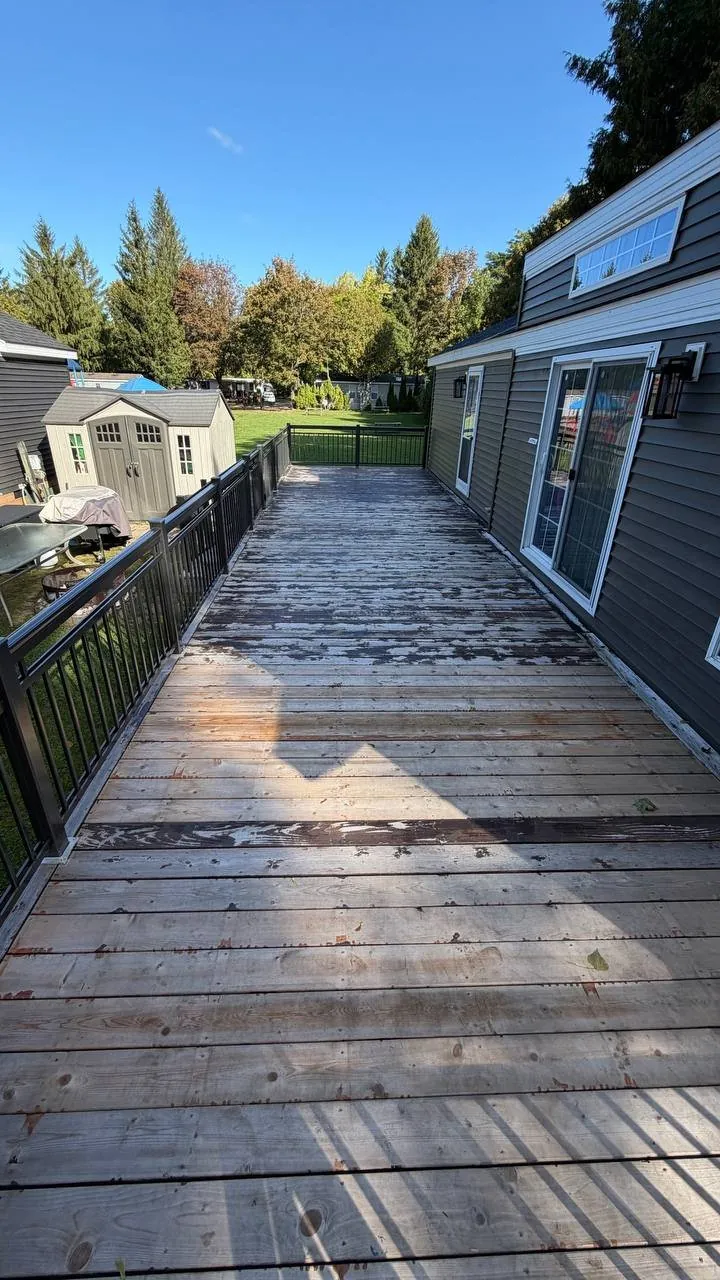

This deck in Whitchurch-Stouffville runs the full length of the back of the house, from the patio doors to the lawn, with black aluminum railings along the open sides. The railings were in good shape. The deck boards were not. The previous stain had been a surface coating, and after a few seasons it had lifted along the whole walkway: in the before photo it is grey and bare in the high-traffic strip down the middle, still dark near the house wall where feet and sun hadn't reached, and flaking everywhere in between. The owners did not want a new deck; they wanted this one to look like it did when the railings went in.
Assessing the deck before refinishing
Not every peeling deck can be refinished. Before quoting we check that the boards are sound: no soft spots, no rot at the ends, fasteners holding, and enough thickness left to sand. These pressure-treated boards passed on all counts, which made this a deck refinishing job rather than a board replacement. The aluminum railings and posts stayed in place; we work around them rather than removing them.
Sanding a long deck to bare wood
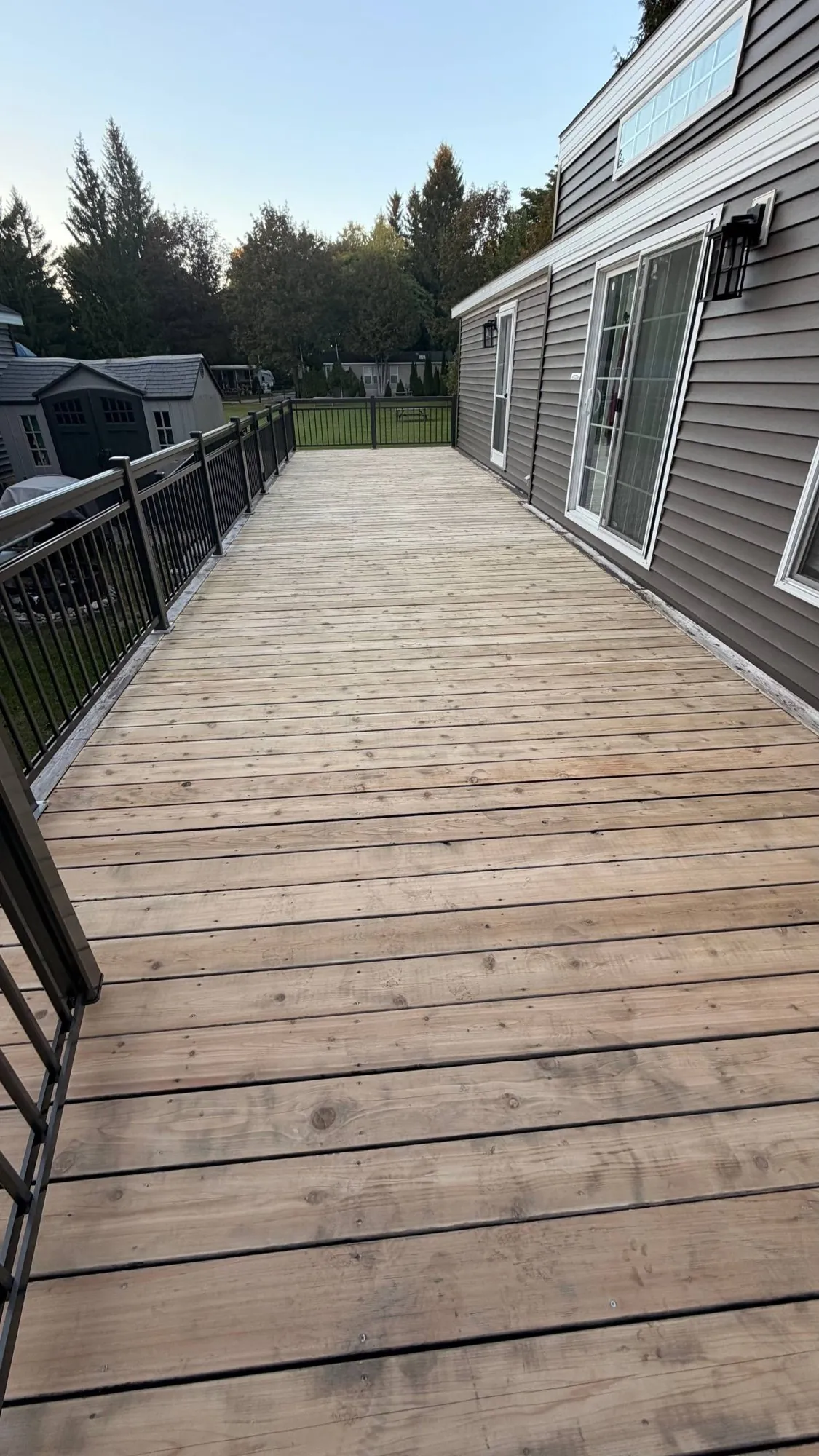
A long, narrow deck like this one is mostly open floor, which is good news for sanding: wide passes with the drum and orbital sanders, then hand and edge work along the house wall, under the railing posts and around the door thresholds. We took every board down to clean, bare wood. You can see the result in the during photo: the whole run back to a uniform pale colour, the old coating gone from the grain, no grey left. The boards were then cleaned of sanding dust and left to dry fully. Stain applied to damp wood does not penetrate properly, so we don't rush this step.
Oil-based stain in a deep brown
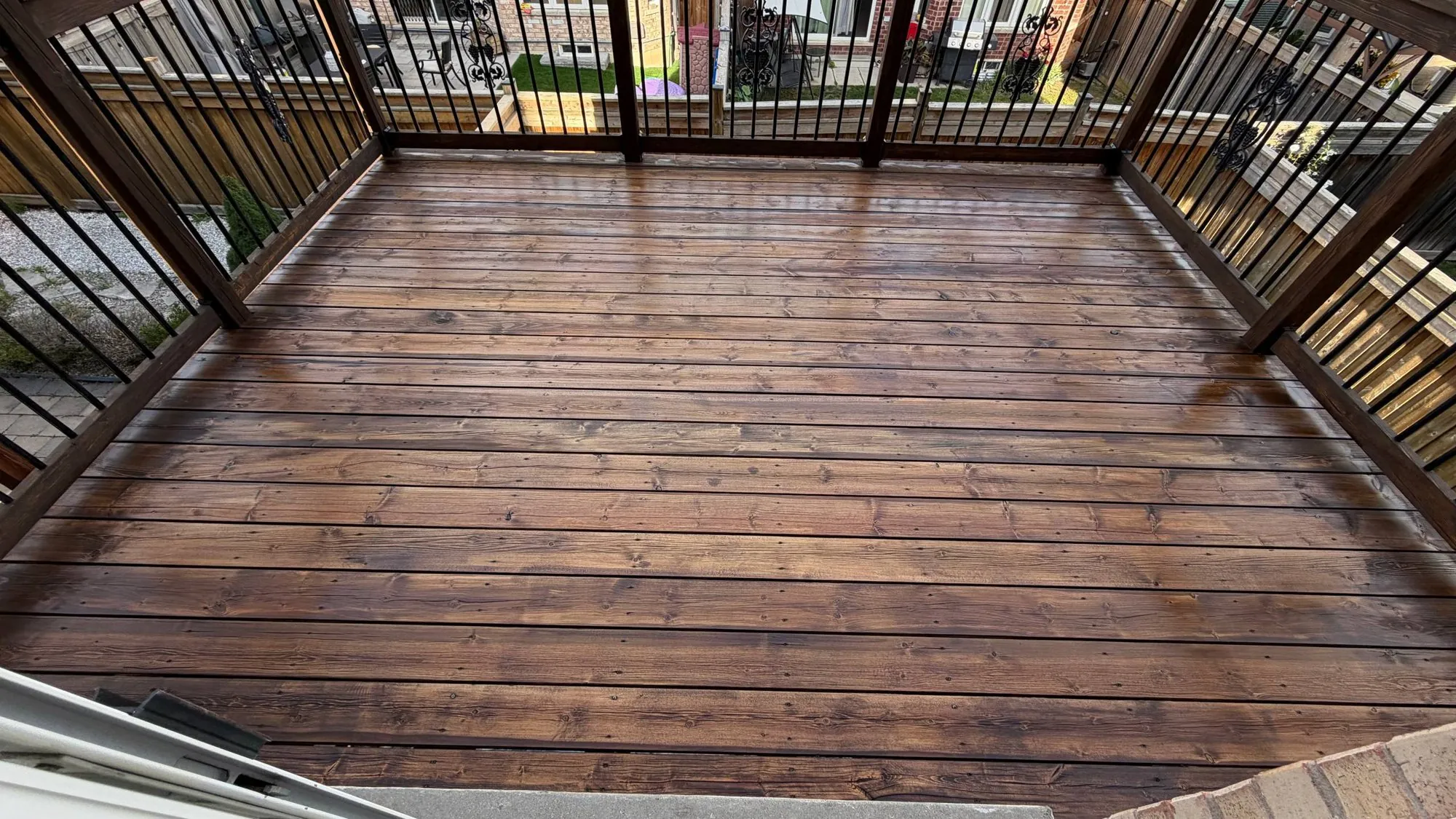
The owners chose a deep brown that ties the deck to the dark railings and the grey siding. We used an oil-based penetrating stain for the same reason we do on every deck that has peeled before: it soaks into the wood and cures inside the board rather than forming a film on top, so there is nothing to crack, lift or peel. The grain and knots of the pressure-treated boards show through the colour, which is what you want from a stain as opposed to a paint. Future maintenance is a wash and a fresh coat, with no stripping.
The result
The after photo is the same deck, same boards, same railings, on a wet September morning: an even, rich brown from the patio doors to the end rail, with the black aluminum railings now reading as a deliberate part of the design rather than the only thing on the deck that looked finished.
We refinish decks like this across York Region and the GTA, from Stouffville, Markham and Richmond Hill to Toronto and Mississauga. The process is always the same: check the wood, sand to bare, stain with a penetrating product, and back it with our 3-year non-peeling warranty. See the deck, fence and porch staining page for how it works, or book a free on-site estimate and we'll tell you whether your deck is a candidate for refinishing.
Project photos